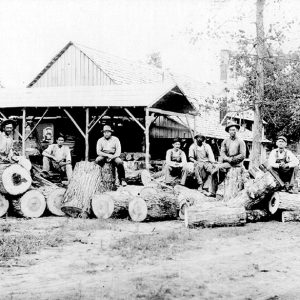
 Hunter Sawmill
 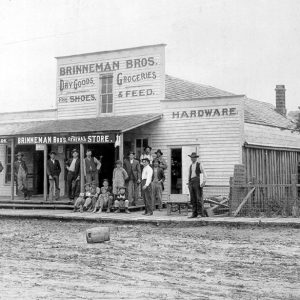 Hunter Store
 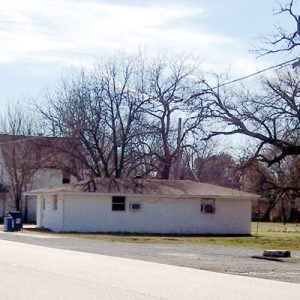 Hunter Street Scene
 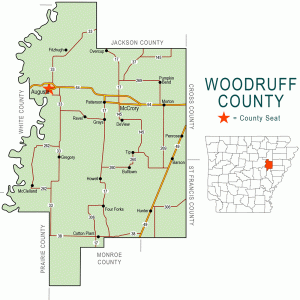 Woodruff County Map
501-918-3025
calsfoundation@cals.org
calsfoundation@cals.org
| Latitude and Longitude: | 35°03’10″N 091°07’34″W |
| Elevation: | 210 feet |
| Area: | 0.62 square miles (2020 Census) |
| Population: | 103 (2020 Census) |
| Incorporated: | August 25, 1906 |
Historical Population as per the U.S. Census:
|
1810 |
1820 |
1830 |
1840 |
1850 |
1860 |
1870 |
1880 |
1890 |
1900 |
|
– |
– |
– |
– |
– |
– |
– |
– |
– |
– |
|
1910 |
1920 |
1930 |
1940 |
1950 |
1960 |
1970 |
1980 |
1990 |
2000 |
|
508 |
343 |
293 |
335 |
286 |
202 |
131 |
170 |
137 |
152 |
|
2010 |
2020 |
|
|
|
|
|
|
|
|
|
105 |
103 |
|
Hunter of Woodruff County was a busy trading and shipping center during the late 1800s and early 1900s and attracted hunters from surrounding areas.
The first settler of Hunter was Edward Shannon Hunt, a Civil War Union soldier from Ohio who served in the area. He admired the abundant game and fishing streams in the area and vowed to return and make his home there. Sometime in the 1870s, along with his family, he did just that. His wife, Elizabeth Ann, served as a midwife and doctor to the other settlers in the area. As more people moved west to settle, Elizabeth Ann set up a wayside inn on the Military Road to accommodate travelers. The place became known as Hunt’s Station and, later, as Hunter.
In 1883, the Southwestern Improvement Association came into the region and filed a plat of Hunter according to law, with streets, alleys, and lots laid out. The association made a deed for a railroad right-of-way through Hunter, which has been used since 1885 and was still being used in 2005 by the St. Louis Southwestern Railroad.
In 1889, the Iowa and Arkansas Land Company bought out an unnamed trust that had purchased large tracts of land in the area. More people began moving into the area, buying land and settling down. Shannon Hunt’s sons, Sherman and Sylvestus “Coot” Hunt, and their brother-in-law Seth Wilson, established a telephone exchange in the mid-1880s called the Wilson and Hunt Brothers Telephone Company. It extended service to Wheatley (St. Francis County) and Cotton Plant (Woodruff County) in 1910. The Hunt brothers also turned to farming, selling hay directly from their farm. In 1919, they tried their hand at a new crop—rice, which is now a mainstay of the area, along with soybeans.
After Hunter was incorporated on July 2, 1906, a schoolhouse was built and churches were established. During the 1920s, a sawmill on the outskirts of town did a thriving business. When it shut down because of the depletion of lumber, Hunter’s economy began to decline.
The Bank of Hunter building still stands in a very dilapidated condition, and only a couple of businesses remain. The school house burned in 1953, and students began attending Brinkley (Monroe County) schools. A number of old homes in the town have been renovated, and residents work in nearby Brinkley or on local farms.
Hunter still maintains a strong sense of community, and each year on the Saturday before July the Fourth, present and former residents gather for a day of food and fellowship.
Gilbert Georgie Collier, born in Hunter, received the Medal of Honor for actions during the Korean War.
For additional information:
Herndon, Dallas Tabor. Centennial History of Arkansas. 3 vols. Chicago: S.J. Clarke Publishing Co., 1922.
Kennedy, Balys Hall. “The Hunts of Hunter.” Rivers and Roads and Points In Between 8 (Spring 1980): 29–39.
Paula Harmon Barnett
Woodruff County Historical Society





Town of Hunter in 2023 built a helicopter pad so the Medivac Helicopter would have a designated place to land in emergencies.
(fall 2023) We need to get word out about the Hunter Community Center. There’s a Family Dance every Friday night and potluck dinner included with price of admission. The band Mystic Country plays from 7-10 p.m. $7.oo is cheap for entertainment and food. Nice people and a fun night for all. This has been going on for over a year now.