501-918-3025
calsfoundation@cals.org
calsfoundation@cals.org
| Latitude and Longitude: | 36º00’29″N 093º11’11″W |
|---|---|
| Elevation: | 834 feet |
| Area: | 0.95 square miles (2020 Census) |
| Population: | 547 (2020 Census) |
| Incorporation Date: | May 8, 1896 |
Historical Population as per the U.S. Census:
|
1810 |
1820 |
1830 |
1840 |
1850 |
1860 |
1870 |
1880 |
1890 |
1900 |
|---|---|---|---|---|---|---|---|---|---|
|
– |
– |
– |
– |
– |
– |
– |
– |
– |
– |
|
1910 |
1920 |
1930 |
1940 |
1950 |
1960 |
1970 |
1980 |
1990 |
2000 |
|
242 |
253 |
385 |
412 |
407 |
316 |
394 |
519 |
332 |
498 |
|
2010 |
2020 | ||||||||
|
466 |
547 |
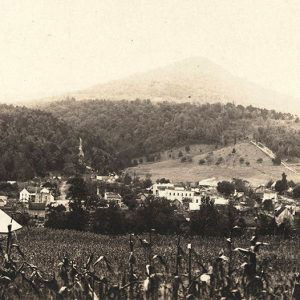
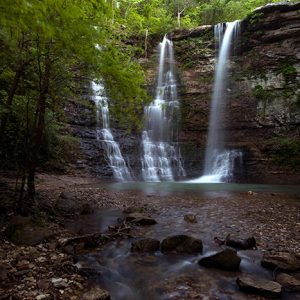
Jasper was established as a village along the Little Buffalo River by 1840. Today, it is the hub for outdoor enthusiasts enjoying the Buffalo National River, one of the last free-flowing waterways in the United States, and the Ozark Highland Trail.
Louisiana Purchase through Early Statehood
At least three different stories are told about the origin of the name Jasper. One oft-repeated legend says that Cherokee Indians traveling west on the torturous Trail of Tears gave the town its name after being surprised by the village’s warm hospitality. A second version of this same story tells of a precious ring, containing a jasper stone, given to the postmaster in gratitude for care given to the Cherokee travelers. Yet another account states that postmaster John Ross coined the name by comparing the mellow color of the local stone to jasper, one of the twelve precious stones mentioned in Revelation.
Settlers began moving to the area as early as 1825, according to census records made in 1850. In 1839, Ross moved his wife and baby from Ohio to Clarksville (Johnson County), where he established a trading post on the Arkansas River. By 1843, Ross had relocated his family to Jasper, where he became the first postmaster and established another trading post.
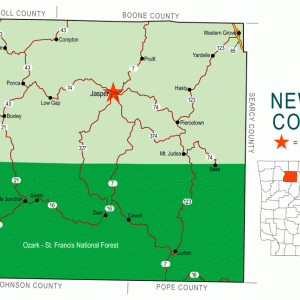
On December 14, 1842, Governor Archibald Yell signed legislation creating Newton County from land in Carroll County. Jasper became the county seat in 1843. Between 1843 and 1849, Ross served in several posts for the town, including postmaster, storekeeper, county clerk, and county judge.
Civil War through the Gilded Age
The Civil War brought strife to this isolated community. The county produced two famous leaders, fighting for different causes. James Vanderpool was a Union hero who returned home in August 1865. John Cecil, former sheriff of Newton County, was known for showing off his twin pearl-handled pistols he had worn as a guerrilla leader for the Confederacy. Newton County as a whole mostly supported the Union; however, in 1863, while searching for Cecil, Union troops burned Jasper to the ground and moved their sympathizers to Springfield, Missouri.
After the Civil War, Jasper became a boomtown. With an abundance of timber, mainly oak (used for stave bolts) and cedar (harvested for the pencil mills), the local sawmills began hiring hundreds of men. The town grew so large that five newspapers were published during this time, including the Jasper American (1884–1900), the Newton Herald (established 1891), The Echo (1889–1890), the Jasper Sentinel (established 1891), and the Newton County Blade (established 1897). From 1880 to 1900, the U.S. Census shows that the population of Newton County grew from 6,120 to 12,538. On December 19, 1895, the residents of Jasper filed a petition to the county court to become an incorporated town.
Early Twentieth Century
Without any great plantations or industry in the area, the economy of Jasper was not affected by the Great Depression like the larger town of Harrison (Boone County).
During the mid-1900s, Dr. William Hudson of Jasper began researching the effects of iodine on the thyroid gland. This research was instrumental in the Morton Salt Company’s decision to produce iodized salt.
William P. Stiritz, former CEO of the Ralston Purina Co., was from Jasper originally. He lived in Jasper with his grandparents until the 1940s, when they moved to Harrison.
World War II through the Faubus Era
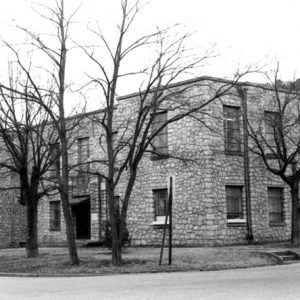
During World War II, Newton County voted to become a “dry” county (in which it is illegal to sell alcohol), as it remains today. The present courthouse was completed in 1942 as a Works Progress Administration (WPA) project. In the 1950s, state Highway 7 was paved from Harrison to Jasper.
Modern Era
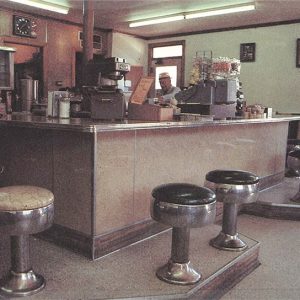
The creation of the Buffalo National River Park in 1972 increased the area’s fishing, canoeing, and camping activities and brought an influx of new residents on the wave of a “back to-the-land” movement. In 1998, Governor Mike Huckabee proclaimed Newton County the “Elk Capital of Arkansas.” Today, the area is enjoyed by Buffalo River tourists, elk watchers, and retirees. Locals still congregate at the Ozark Café, a Jasper tradition since 1909.
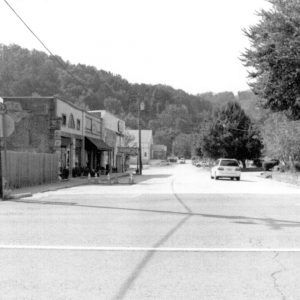
Jasper has never had an African American neighborhood, and even today, few if any Black citizens live in Jasper. The downtown Jasper Commercial Historic District is listed on the National Register of Historic Places, as is the nearby Parker-Hicman Farm Historic District.
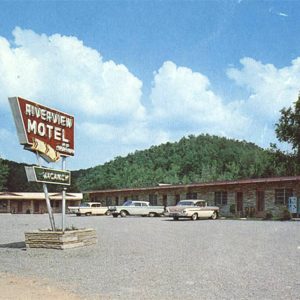
There are a few farms in the area, but the primary industry is tourism. A few retirement homes have been built in recent years.
For additional information:
Lackey, Walter F. History of Newton County, AR. Independence, MO: Zion’s Printing and Publishing Company, 1950.
The Newton County Family Histories. 2 vols. Jasper, AR: Newton County Historical Society, n.d.
Rose Lacy
Fayetteville, Arkansas


There are numerous cabin rentals in the county and around Jasper. The town square features a courthouse in the center and a gazebo. Around town is beautiful rock work by mason Gould Jones. Bradley Park inside the city limits sits aside the Little Buffalo River and has a walking trail, a pavilion, a grill, a small swimming beach, and a performance stage. Note: The comment about no black neighborhoods does not match the tone of the rest of the article. Why mention that? Most towns in this part of the state have no black neighborhood.