501-918-3025
calsfoundation@cals.org
calsfoundation@cals.org
| Latitude and Longitude: | 34º58’20″N 090º54’09″W |
|---|---|
| Elevation: | 207 feet |
| Area: | 3.30 square miles (2020 Census) |
| Population: | 506 (2020 Census) |
| Incorporation Date: | April 23, 1889 |
Historical Population as per the U.S. Census:
|
1810 |
1820 |
1830 |
1840 |
1850 |
1860 |
1870 |
1880 |
1890 |
1900 |
|---|---|---|---|---|---|---|---|---|---|
|
– |
– |
– |
– |
– |
– |
– |
145 |
163 |
196 |
|
1910 |
1920 |
1930 |
1940 |
1950 |
1960 |
1970 |
1980 |
1990 |
2000 |
|
173 |
297 |
209 |
345 |
420 |
532 |
755 |
976 |
711 |
741 |
|
2010 |
2020 |
|
|
|
|
|
|
|
|
|
681 |
506 |
|
|
|
|
|
|
|
|
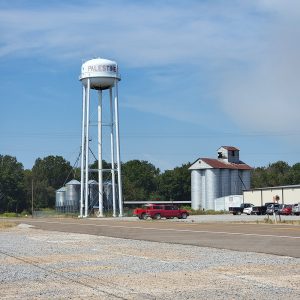
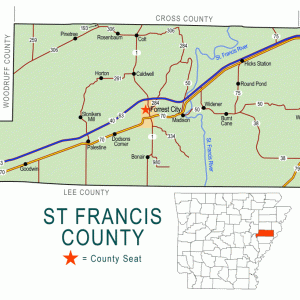
Palestine is located in northeastern Arkansas on Interstate 40 and State Highway 70, with the L’Anguille River on its east side. It is one of the oldest towns in St. Francis County and was also the site of the first county school.
Civil War through Reconstruction
In 1840, what is now Palestine was part of the much larger L’Anguille Township, which had only nine recorded households. The Prairie Township was formed from part of the L’Anguille Township in the 1870s (including the African-American communities of El Cannon, Shiloh, Hawkins, Weaver, Fullerton, and Cooperwood), and the Palestine area, which was located centrally within the Prairie Township, grew in population. Palestine was named in 1870, when the first post office was established there. One story about the naming holds that it was named after a fatally injured sawmill employee named Palestine, while another account claims that the town’s first postmaster selected the name from the Bible. In 1874, fire destroyed the court records of St. Francis County; some deeds were reconstructed back to the 1860s, but some were forever lost.
Post Reconstruction through the Gilded Age
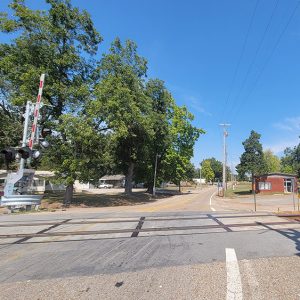
The town of Palestine was incorporated in 1889. It was a bustling town that grew with the development of the Rock Island Railroad. Main Street, located along the railroad, housed early businesses that faced the tracks. Stores included D. K. Burns, Sulcer’s, and J. H. Halbert’s. A fire in the 1890s destroyed many of these businesses. Halbert’s and Sulcer’s were rebuilt, and Burns opened a parts store. D. K. Burns also took part in one of Palestine’s main industries when he acquired a cotton gin from Sam Sulcer. Burns Bros. Gin, located in the heart of Palestine on Wood Street (now Highway 70), began operating in 1896; it was reportedly still operating in the 1960s. An African-American man named Mallard Threlkeld operated a sorghum mill that he rebuilt after the fire.
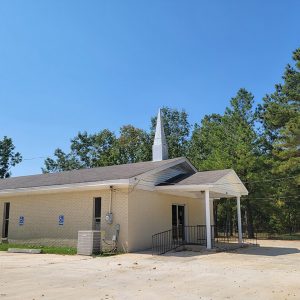
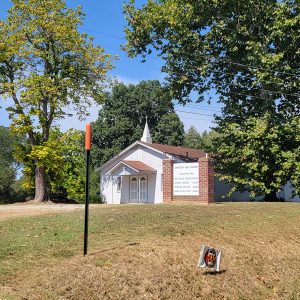
The Palestine Cumberland Presbyterian Church (established 1884) and the El Cannon Missionary Baptist Church (established 1899) are two of St. Francis County’s oldest active congregations. Before the Cumberland Presbyterian church building was constructed in 1884, the congregation gathered at the local white school. The original building hosted both Methodist and Presbyterian services and was located about 1.5 miles south of present-day Highway 70. A wood-framed building was constructed to house the church across from Burns Bros. Gin but then was replaced in the 1950s by a newer building with a stone façade. El Cannon Missionary Baptist Church is one of the oldest African-American churches in the county. It served as a school for black children until 1917. A newer church building was erected on one acre of land donated by African-American landowners Rev. Mark E. Smith and Charity Smith.
Early Twentieth Century
In 1905, Palestine had a population of about 200. It had five dry-goods and general supply stores, two grocery stores, and one drugstore. Schools at this time were segregated. School was conducted nine months out of the year for white students, and about 100 white students attended; African-American students attended school seven months out of the year, using a split-term system revolving around crop production, and about seventy-five students attended. Free service for telephones was furnished to several phones in the area by Southwestern Bell in 1905.
Palestine Special School District was formed in 1913—the first consolidated school district in the state. The consolidation of white schools was made possible after R. J. Hubbard, who was the principal of Palestine schools in 1912, and state Representative Sam F. Sulcer wrote a bill proposing consolidation, with Sulcer as the sponsor. The bill was passed in 1913, consolidating Palestine, Sloniker’s Mill (St. Francis County), and Moon Lake (St. Francis County) schools. The original two-room schoolhouse was not large enough to hold all the new students, so the Palestine school building and the local Baptist church building were used for classes. In 1914, a new brick building housed the consolidated school district, with 110 students in attendance. For the first year, students who lived in the outer reaches of the school district had public transportation. All the money the school district possessed, however, went into the construction of the new building, leaving no money to pay teachers’ salaries for the 1915–16 term. Three local women who were former students—Aubrey Wilkerson, Nell Stringfellow, and LaVergne Holwell—volunteered their time. By 1917, the Palestine Special School District was back on its feet financially, and enrollment increased.
African-American education followed a different path. After Reconstruction and until 1972, schools in Palestine were segregated. In 1917, several African-American community schools in District #18 were consolidated to form Palestine Consolidated School for Colored Children. Before this consolidation, black students attended schools in their respective communities. The community schools were held at El Cannon Baptist Church, Shiloh Methodist Church, Hawkins, Weaver, Fullerton, and Cooperwood, with one teacher staffing each school. Students who wished to have an education above sixth grade had to board in Forrest City (St. Francis County) at their own expense and attend Lincoln School. The Palestine Consolidated School for Colored Children was located two blocks north of the Rock Island tracks and eight miles east of Forrest City. After the school began to grow, another building was added. During its early years, the school transported its students by mule and wagon. Later, the school used trucks before finally acquiring buses. Drivers often donated their time.
World War II through the Modern Era
From 1955 to 1972, Walker Fleming, a World War II veteran and a graduate of Arkansas Agricultural, Mechanical, and Normal College (which would later become the University of Arkansas at Pine Bluff), was the principal of the African-American school in Palestine. Renamed the Palestine Training School, it covered grades 1–8 and operated nine months per year. Fleming’s wife, Ruby Smith Fleming, who was a third-grade teacher at the school, implemented an aggressive reading program. With Fleming as principal, the school accomplished much, including achieving district and state recognition, acquiring principal and teacher membership in Arkansas Teachers Association, organizing its first drama tournaments and productions, creating its first Head Start Program, becoming the first school in the area to use standardized testing, establishing its first hot lunch program, and implementing its first formal graduation ceremony. On May 23, 1956, the Palestine Training School graduated its first class, promoting twelve students to the ninth grade; eight of these students attended Lincoln High School in Forrest City and graduated in 1961.
In 1965, ten students graduated from the white high school. By 1968, the white school district had 340 students and consisted of four buildings. In 1972, the schools were integrated, and academic competition between white and black students began; that year, a black student achieved the highest score among all students on the standardized test.
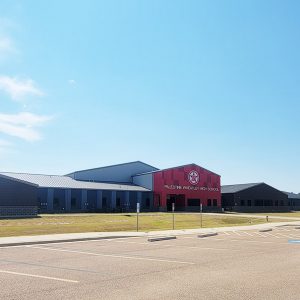
In the 1980s, the Palestine schools and Wheatley (St. Francis County) schools consolidated to form the Palestine-Wheatley School District; the Palestine Red Devils and the Wheatley Pirates—former rivals—formed the Patriots. In the twenty-first century, Palestine houses the elementary and high schools, while the middle school is located in Wheatley. The original high school building in Palestine was demolished in the 1980s and replaced with a more modern facility.
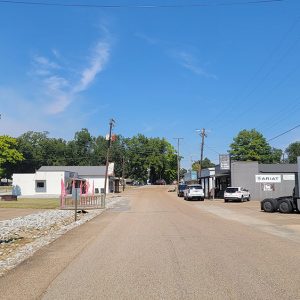
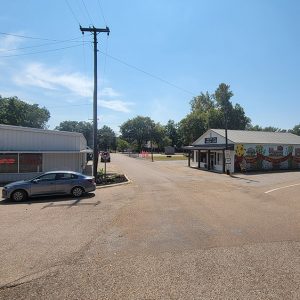
Palestine remains an agricultural community, with many of its residents growing cotton, rice, and soybeans, as well as raising livestock. By 2020, Littlefield’s Grocery was the only store still operating on Main Street.
For additional information:
Chowning, Robert W. History of St. Francis County, Arkansas 1954. Forrest City, AR: Times Herald Publishing Company, 1954.
Ellis, Richard Owen. Pine Tree Times: History of the L’Anguille Township in St. Francis County and the Ellis Township in Cross County. Tulsa, OK: The Printing Company, 2003.
Kennedy, Balys Hall. “Half a Century of School Consolidation in Arkansas.” Arkansas Historical Quarterly 27 (Spring 1968): 59–67.
Stephanie Darnell
Forrest City, Arkansas
Helen Fleming Johnson
Leander, Texas


Palestine Church was started by my third-great-grandfather.
My father was principal of Palestine Training School, a segregated school for African Americans. His name was Walker Fleming Jr. The history of Palestine should include the work of all the many dedicated teachers and students who taught and learned there.