501-918-3025
calsfoundation@cals.org
calsfoundation@cals.org
| Latitude and Longitude: | 34º35’45″N 092º29’20″W |
|---|---|
| Elevation: | 413 feet |
| Area: | 20.49 square miles (2020 Census) |
| Population: | 20,663 (2020 Census) |
| Incorporation Dates: | October 29, 1892; 1946 |
Historical Population as per the U.S. Census:
|
1810 |
1820 |
1830 |
1840 |
1850 |
1860 |
1870 |
1880 |
1890 |
1900 |
|---|---|---|---|---|---|---|---|---|---|
|
– |
– |
– |
– |
– |
– |
– |
– |
– |
113 |
|
1910 |
1920 |
1930 |
1940 |
1950 |
1960 |
1970 |
1980 |
1990 |
2000 |
|
91 |
132 |
162 |
173 |
387 |
737 |
1,199 |
2,682 |
5,269 |
9,764 |
|
2010 |
2020 |
|
|
|
|
|
|
|
|
|
16,688 |
20,663 |
|
|
|
|
|
|
|
|
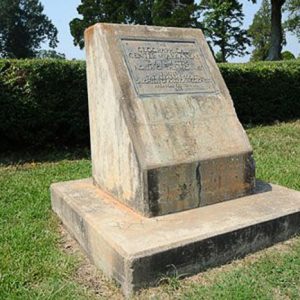
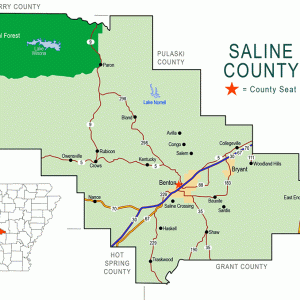
Bryant (Saline County) is a small city that is currently growing and developing into an extension of the Little Rock (Pulaski County) metropolitan area. It has a long history of local and regional significance, although it has had few residents for most of its history. The Geographical Center of Arkansas marker is located within Bryant city limits. From the early days of the railroad in central Arkansas to the construction of an interstate, Bryant has been at the forefront of transportation in the state.
Louisiana Purchase through Early Statehood
Bryant’s earliest inhabitants of European descent settled along Hurricane Creek in the early part of the nineteenth century. Local legend holds that these pioneers were traveling to Texas when they came upon the flooded creek and were unable to cross for several days. While waiting for an opportunity to cross the creek, they became attached to the area and decided to stay there instead of continuing on to Texas. A settlement called Dogwood Springs (founding date unknown) existed just to the north of present-day Bryant prior to 1835. In that year, Dogwood Springs became known as Collegeville.
Civil War through the Gilded Age
On October 23, 1864, Federal and Confederate forces met just outside of present-day Bryant in a minor engagement of the Civil War known as the Skirmish at Hurricane Creek, or the Battle of Hunter’s Crossing. After raiding a Confederate arsenal at Princeton (Dallas County), Federal troops were met by the Eleventh Arkansas Confederate Cavalry. The skirmish was of little tactical significance, but it resulted in twenty-eight men killed and eleven wounded. After the fighting, the women of the area went to the battlefield to care for the wounded soldiers and bury the dead.
After the Civil War, present-day Bryant benefited from the growth in infrastructure that took place during the Reconstruction era throughout the South. In 1871, the St. Louis and Iron Mountain Railroad began work on a line from Little Rock. This was completed in 1873.
The railroad helped the town to grow. Many businesses, including a canning factory, opened around the Bryant train depot. In 1878, the Bryant Township was created. This was the first time the name Bryant was used officially for the settlement. Prior to this time, the area was part of the Owen Township. The township continued to grow, and on October 29, 1892, Bryant became an incorporated town. Bryant reincorporated as a first-clas city in 1946 when its first mayor, Conway Ashley, was elected.
Early Twentieth Century
The Great Depression seems to have started early in Bryant. Beginning around 1910 and ending in the 1930s, the population of the town and surrounding area was in decline. Either as an effect or cause of this decline, many stores and businesses closed their doors, including the hotel and the canning factory.
World War II through the Modern Era
During World War II, the bauxite deposits near Bryant became vital to the American war effort. Two aluminum plants were built near Bryant at Bauxite (Saline County), which created a period of economic growth as well as a dramatic increase in Bryant’s population. Between 1940 and 1950, Bryant’s population increased from 173 to 387.
On May 5, 1965, the Bryant School Board desegregated its schools, mostly without incident. Prior to that time, African-American students living in Bryant, as well as in the rest of Saline County, attended a separate school located in Alexander (Pulaski and Saline counties). In the spring of 1966, Ronald Wallace, William Wallace, and Ken Jones became the first black students to graduate from Bryant High School.
Interstate 30 was built through Bryant during the 1950s. This created a new period of population growth that has continued to the present day. In recent decades, Bryant has become home to many commuters from Little Rock. Between 1990 and 2000, Bryant’s population increased from 5,269 to 9,764, then increased to 16,688 by the 2010 census and 20,663 by the 2020 census. In 2000, the city’s population was 95.2 percent white/non-Latino, 1.5 percent African American, and 1.1 percent Latino. By the 2010 census, however, the minority population had increased: 87 percent white/non-Latino, 6.7 percent black, and 4.7 percent Latino.
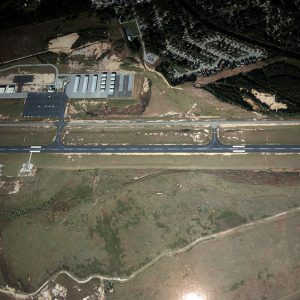
Today, the Bryant area is gaining a number of new retail facilities and restaurants as a result of recent growth. These retailers include Lowe’s, Kohl’s, and Target. New restaurants include Chile’s, Ruby Tuesday, and Applebee’s. Most of the new development is along the interstate, leaving the old center of Bryant virtually unchanged. The Saline County Regional Airport is located southeast of Bryant. Bryant is served by the Mabel Boswell Memorial branch of the Saline County Library.
A competitive spirit between Benton and Bryant high school football teams led to the creation of the Salt Bowl, held every fall since 2000. The game attracts fans and alumni from all over Saline County and averages attendance of over 20,000.
In 2002, the historic Kirkpatrick Cemetery was rediscovered by local resident Ben Holder. It was placed on the Arkansas Register of Historic Places in 2009.
Bryant is home to several notable figures: Scott Suggs, who won one million dollars in the Forrest Wood Cup fishing tournament in 2007, and Sean Michel, who was a contestant on American Idol, both have local fame. In addition, Shane Broadway, who was born in Benton and raised in Bryant, has served as a member of the Arkansas House of Representatives, speaker of the House, a member of the Arkansas Senate, and interim director of the Arkansas Department of Higher Education. He was then appointed vice president of governmental relations at Arkansas State University (ASU) in Jonesboro (Craighead County). Legendary women’s basketball coach Karen Aston played for Bryant when she was in high school, as did Tina Webb, who played professionally in Europe. Major League baseball player Travis Wood grew up in Bryant.
For additional information:
Boswell, Mabel Lawson, and Valine Boswell Mayer. Bryant Profiles, 1828–1976. Bryant, AR: Bryant Bicentennial Committee, 1976.
Bryant Chamber of Commerce. http://www.bryantchamber.com/ (accessed January 18, 2023).
Rewes, Lawson. “In Thee We Are Sheltered.” Unpublished manuscript. Arkansas Collection. Saline County Library, Benton, Arkansas.
Steven Dyer
Bauxite, Arkansas


I purchased a house in the old village of Bryant, Arkansas, from the Boswell family. They informed me that it was in fact the house of Conway Ashley, Bryant’s first mayor. I’m hoping to find out more of the history surrounding the Ashley family and find old photographs of my house. It’s a wonderful old house with good bones.